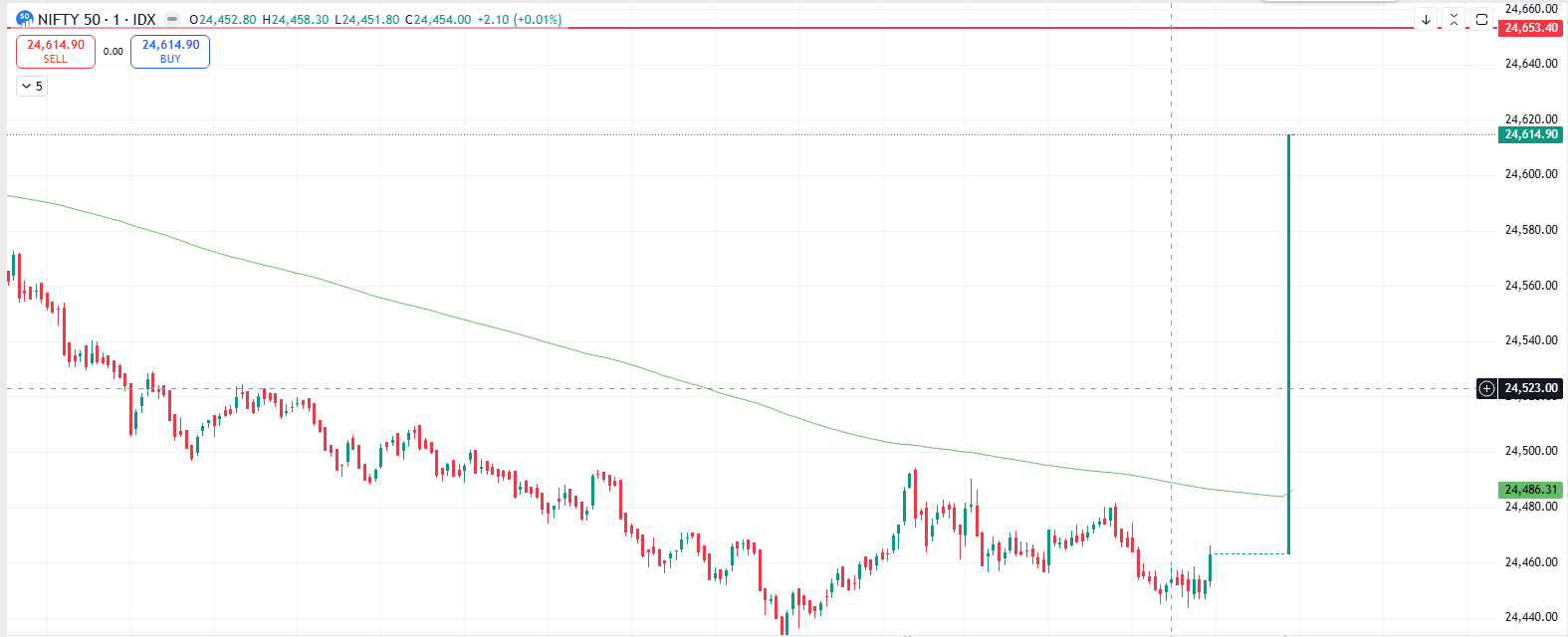
At 3:29 PM yesterday, thousands of traders across India did what they've always done: watched the ticker, waited for 3:30, and assumed the last printed price was the closing price.
It wasn't. Not anymore.
On August 3, 2026, NSE quietly ended a 25-year-old method of deciding what a stock is "worth" at the end of the day — and replaced it with something closer to how London, Singapore, and New York have done it for years. It's called the Closing Auction Session (CAS), and if you trade, invest, or run any strategy that references a daily "close," it just changed the ground under your feet.
Here's everything that actually happened, in plain terms — no jargon, no fluff, just what you need to know before you place your next order near 3 PM.
The Old System, in One Line
Until August 2, 2026, a stock's official closing price was the Volume Weighted Average Price (VWAP) of every trade executed between 3:00 PM and 3:30 PM. Average out the last 30 minutes of trading, and that average becomes tomorrow's opening reference, today's portfolio valuation, and — critically — the number your F&O contracts settle against.
Sounds fair. It wasn't always.
A single large, well-timed order in a thinly traded stock, dropped in the last few minutes of that window, could visibly tilt the average. It happened often enough, and mattered enough for expiry-day settlements, that SEBI decided the mechanism itself needed to change — not just get monitored more closely.
What Replaced It: An Actual Auction
CAS doesn't average trades. It collects orders first, then finds one single price — the price at which the maximum number of shares can actually change hands. This is called the equilibrium price, and it's the same basic idea the London Stock Exchange, Euronext, SGX, and Nasdaq have all used for their closing auctions for years.
Here's the mechanic in plain steps:
- Continuous trading for eligible stocks stops.
- Everyone — buyers and sellers — submits orders into a single pool for a fixed window. Nothing executes immediately.
- At the end of the window, the exchange calculates the one price that clears the most volume.
- Market orders get matched first, ahead of limit orders.
- That price becomes the official close. Full stop.
If, for some reason, no orders match at all, the pre-set reference price simply becomes the close by default. There is no scenario — by design — where a stock ends the day without an official closing price.
The New Clock: Everything Shifted
This is the part that trips people up first, because the market no longer closes at one single time. It now closes at three different times depending on what you're trading.
| Segment | What happens | Time |
|---|---|---|
| F&O-eligible stocks (Category I) | Continuous trading ends | 3:15 PM (was 3:30 PM) |
| F&O-eligible stocks (Category I) | Closing Auction Session runs | 3:15 PM – 3:35 PM |
| Non-F&O stocks (Category II) | Trading continues as before, VWAP close unchanged | till 3:30 PM |
| Stock & Index F&O (derivatives) | Trading extended to give traders time to react to the new close | till 3:40 PM |
| Post-close session | Shifted 10 minutes later | 3:50 PM – 4:00 PM |
| Equity intraday (MIS) positions | Auto square-off — earlier than before | 3:05 PM |
Notice that last row. If you run intraday positions, your effective trading day for MIS just got 10 minutes shorter, not longer — SEBI moved the auto square-off to 3:05 PM specifically so intraday flow doesn't spill into the auction window and distort it.
Meanwhile, if you trade equity derivatives, you actually gained time — an extra 10 minutes to hedge, exit, or react once you see where the auction actually settled the underlying.
Which Stocks Does This Actually Apply To?
Not all of them — yet.
SEBI split the entire cash market into two buckets:
- Category I — stocks that have active F&O contracts. These go through CAS starting now.
- Category II — everything else. These keep the old VWAP mechanism, unchanged, for now.
SEBI has explicitly left the door open to extending CAS to Category II stocks later, once they've seen how the F&O rollout performs. So if your trading is concentrated in smaller, non-derivative stocks, nothing changes for you today — but don't assume that's permanent.
Delivery holdings, mutual funds, SIPs, and ETFs need zero action from you. This entire change is about how the closing price itself gets calculated — it doesn't touch how your existing holdings are settled or valued day to day beyond that number now being computed differently.
What Happens to Orders You Already Placed?
If you had a limit order sitting unexecuted when continuous trading ended, here's what happens to it:
Carries forward into the auction automatically:
- Regular unexecuted limit orders from the continuous session
Does NOT carry forward — cancelled instead:
- Stop Loss orders
- Iceberg orders
- Any order priced outside the auction's applicable price band
This matters more than it sounds like it should. If your strategy — manual or automated — relies on a stop-loss order sitting live into the close, that order simply won't exist anymore once continuous trading ends at 3:15 PM. You need to actively manage that position before the cutoff, not assume the exchange will carry your protection into the auction for you.
Why SEBI Actually Did This
Four reasons, and they're worth understanding because they tell you what to expect going forward:
1. Closing-price manipulation gets harder. The old VWAP window rewarded a single well-timed large order. An auction that matches orders collectively — rather than executing them sequentially — removes that specific point of leverage almost entirely.
2. Price discovery gets more efficient. Instead of an average of scattered trades, you get one price that reflects genuine aggregate supply and demand at a single moment.
3. Passive and large investors benefit directly. Index funds and ETFs rebalance at the close. A cleaner, harder-to-game closing price means less tracking error for anyone whose fund performance is measured against that number.
4. India now matches global practice. LSE, Euronext, SGX, and Nasdaq have run closing auctions for years. This isn't India experimenting — it's India catching up to a mechanism that's already the global standard.
What Should You Actually Do Differently?
If you're a long-term investor — nothing. Your SIPs, holdings, and mutual fund NAVs are unaffected in any way you need to act on.
If you're an intraday (MIS) trader — your effective window closed 10 minutes earlier than you're used to. Adjust your habits now, not on a day it costs you.
If you're an options or futures trader — you now have an extra 10 minutes of derivatives trading specifically so you can react to where the underlying actually settled. Use it. The old habit of "the close is the close, I already know the number" doesn't apply anymore — you may genuinely not know the exact close until the auction resolves.
If you place limit orders near the close, especially with stop-losses attached — understand that your stop-loss will not survive into the auction. If you're relying on it as protection into the close, you need a different plan for that window.
If you backtest or automate strategies — and this is the one most people miss — any strategy logic that assumes a single, continuous trading session ending at a single time, or that references "closing price" using the old VWAP-style calculation, needs to be re-checked against the new mechanism. A backtest run on pre-August 2026 data and a live strategy running today are now, technically, operating under two different closing-price regimes for F&O stocks. If your historical data doesn't distinguish between the two, your backtest results may no longer reflect what actually happens at the close going forward.
The Bigger Picture
This went live in a phased rollout on August 3, 2026, and the first day already saw real participation — over 515 trading members placing orders across 56,773 unique PAN accounts, which the exchange itself called a strong start for a first day. This isn't a proposal anymore. It's live, it's running, and Category II stocks are very likely next.
There's also a related change coming on September 7, 2026 — a restructuring of the morning pre-open session under the same regulatory framework. Same underlying goal: cleaner, harder-to-manipulate price discovery at the moments that matter most.
The mechanism is new. The reasoning behind it isn't — every serious exchange in the world eventually converges on the same idea: the closing price is too important to be left to whoever places the last convenient trade.
This article is for educational purposes only and does not constitute investment advice. Trading and investing in securities markets carries risk. Always verify current exchange rules directly with NSE/BSE circulars before making trading decisions around session timings.